 English


- Common Causes of Itchy Vulva
- Chinese Herbal Prescriptions for Itchy Vulva
- External Herbal Remedies for Itchy Vulva
- Acupuncture and Moxibustion Therapies for Itchy Vulva
- Relief Tips for Itchy Vulva
- Chinese Dietary Advice for Itchy Vulva
The vulva refers to the external part of the female genitalia, including the vaginal opening, labia majora, labia minora, clitoris, and urethral opening. The skin and mucous membranes in this area are very delicate and sensitive, so even mild irritation can cause itching, burning, or stinging sensations.
Vulvar itching is a common but distressing symptom that can affect women of all ages. It often becomes more intense at night, interfering with sleep and daily activities. In some women, the condition may come and go repeatedly over many years, leading to considerable physical discomfort and psychological stress. Persistent or severe vulvar itching is medically known as pruritus vulvae.

Treatment for itchy vulva should be focused on the underlying causes.
Common Causes of Itchy Vulva
Vulvar itching, also known as an itchy vulva or external vaginal itching, is a symptom that can occur in many different conditions, including irritation, infection, skin disorders, allergies, and even cancer. Effective treatment depends on identifying and addressing the underlying cause, making professional medical advice essential. Common causes of vulvar itching include:
- Yeast Infection (thrush): A yeast infection is caused by an overgrowth of fungi that normally live in the genital area. Common triggering factors include antibiotic use, birth control pills, corticosteroids, hormonal changes, diabetes, sexual activity, and a weakened immune system.
Although yeast infections are a common cause of vulvar itching, other possible causes should not be overlooked. Over-the-counter antifungal products should not be used continuously or for long periods without medical advice. - Vaginitis: Inflammation or infection of the vagina caused by bacteria, viruses, or sexually transmitted infections. It is often associated with abnormal discharge, odor, or irritation.
- Menopause, pregnancy, and breastfeeding: Hormonal changes can make vulvar tissues thinner, drier, and more sensitive. Increased vaginal discharge during pregnancy may also cause irritation.
- Allergic reactions and contact dermatitis: Soaps, detergents, wet wipes, sanitary products, synthetic fabrics, and other personal care products may trigger irritation or allergic reactions.
- Skin conditions: Eczema, psoriasis, lichen simplex chronicus, and lichen sclerosus can affect the vulva, causing redness, skin changes, and persistent itching.
- Urinary or fecal irritation: Prolonged contact with urine or feces, excessive moisture, or improper hygiene practices can irritate the vulvar skin.
- Parasitic infestations: Pubic lice, scabies, and threadworms may cause itching in and around the genital area.
- Vulvar cancer: Although rare, persistent vulvar itching can occasionally be a symptom of vulvar cancer, especially when accompanied by a lump, sore, or skin changes.
- Systemic diseases: Conditions such as diabetes, thyroid disorders, kidney disease, liver disease, and certain blood disorders may contribute to itching.
- Stress and anxiety: Emotional stress can increase the perception of itching and may lead to scratching that further worsens symptoms.
- Medication side effects: Some medications can cause itching as an unwanted side effect.
When to Seek Medical Attention
In many cases, vulvar itching results from a combination of factors rather than a single cause. It can be difficult to identify the underlying problem without professional assessment. Proper diagnosis and treatment are important to prevent persistent symptoms, complications, or long-term damage.
You should seek medical attention promptly if vulvar itching is accompanied by any of the following symptoms:
- Abnormal vaginal discharge
- Unpleasant odor
- Pain, burning, or swelling
- Vaginal bleeding unrelated to menstruation
- Skin ulcers, sores, or open wounds
- A lump or growth in the vulvar area
- Persistent or worsening symptoms despite self-care
For women with persistent vulvar itching, especially when conventional investigations fail to identify a clear cause, Chinese medicine may offer additional support. Traditional Chinese Medicine (TCM) approaches the condition from a holistic perspective, seeking to restore balance within the body rather than focusing solely on local symptoms. With its long history in women’s healthcare, TCM uses individualized treatments that may help relieve itching and improve overall health and quality of life.

The Governor Vessel, Conception Vessel, Thoroughfare Vessel and Girdling Vessel meridians play important roles in woman’s physiology.
Chinese Herbal Prescriptions for Itchy Vulva
From a TCM holistic view, the vulva is viewed as an integral part of the female reproductive system. It is believed to be closely linked to the body’s internal organs, particularly the liver, spleen, and kidney, through an interconnected network of regular meridians, and also the Thoroughfare Vessel , Conception Vessel and Governor Vessel , that support and ensure the external genitalia to stay in proper conditions.
Vulvar itching can result from both internal and external causes. Internal causes are often linked to dysfunction of the zang-fu organs. For example, liver and kidney deficiency may fail to nourish the genital area, while spleen and kidney yang deficiency can lead to dampness accumulation that may transform into damp-heat, causing itching. External causes include infections, parasitic infestations, and local trauma, which can disrupt the flow of qi and blood in the vulvar region and trigger itching and discomfort.
TCM treats vulvar itching based on syndrome differentiation. The patient’s pattern is identified through a comprehensive assessment of general symptoms, local vulvar signs, menstrual and vaginal discharge patterns, together with gynecological examination findings and relevant laboratory results. Based on the identified pattern, an individualized treatment plan is then developed. To promote complete recovery, treatment often combines internal herbal therapy with local therapies, such as herbal washes, sitz baths, or vaginal applications, to relieve itching, reduce discomfort, and support healing.
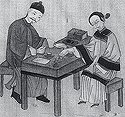
Traditional TCM consultation
Generally, itchy vulva is broadly classified into excess and deficiency patterns. Excess disharmonies are more common in women of reproductive age, damp-heat descending in lower burner being a frequent presentation. Deficiency disharmonies are more often seen in peri- and postmenopausal women, commonly involving liver and kidney yin deficiency or blood dryness generating wind.
Below are the common disharmony patterns of itchy vulva and the anti-itch remedies.
Damp-heat accumulated in lower burner
Vulvar itching with profuse yellow, foul-smelling vaginal discharge. Gynecological examination reveals redness and congestion of the vulva and vagina. Associated symptoms include irritability, poor sleep, chest oppression, a bitter sticky taste in the mouth, poor appetite, and dark-yellow scanty urine. The tongue is red and covered by yellow and greasy coating, and the pulse is rolling and rapid.
Treatment principle should aim to clear heat, drain dampness, eliminate local irritations and stop itching.
Sample prescription: modified Gentian Liver-Purging Decoction or
Poison Yam Draining Dampness Decoction plus atractylodes rhizome, dictamnus root bark, carpesia grass
Yin deficiency of liver and kidney
Vulvar itching with burning, dryness, and worsening symptoms at night. Vaginal discharge may be yellow and occasionally blood streaked. Associated symptoms include five-center heat, dizziness, blurred vision, hot flashes, sweating, dry mouth with little desire to drink, lower back soreness, and ear ringing. The tongue is red and little coating, the pulse is thready, taut and rapid.
Treatment principle should aim to nourish yin, check virtual fire, and invigorate liver and kidney.
Sample prescription: modified Rehmannia Pill Plus Anemarrhena and Corktree Bark, plus angelica root, dictamnus root bark, processed fleeceflower root, belvedere fruit
Blood deficiency creating dryness and wind
Vulvar itching that worsens at night, accompanied by vulvar dryness and occasional scaling. Associated symptoms may include dizziness, blurred vision, palpitations, poor sleep with vivid dreams, forgetfulness, a pale or sallow complexion, and dry stools. The tongue is pale and the pulse is thready and hesitant.
Treatment principle should aim to enrich blood, moist dryness, and stop itching.
Sample prescription: modified Nourish Blood to Conquer Wind Decoction
Fire accumulated in liver and heart
Vulvar itching worsens in the evening or at night, with no significant abnormalities on gynecological examination. Associated symptoms may include chest oppression, irritability, emotional distress, excessive anger or worry, and sleep disturbance. The tongue is slightly red and covered by yellow and greasy fur, and the pulse is taut, thready and rapid.
Treatment principle should aim to clear liver and resolve stagnation.
Sample prescription: modified Free and Easy Wanderer Plus
External Herbal Remedies for Itchy Vulva
External herbal remedies are important for itchy vulva, and are usually applied in wash, compression, powder or cream forms by TCM physicians. The effective ingredients can act direct on the private part, to clean, deodorize, eliminate harmful irritations, arrest discharges, stop itching, anti-septic, anti-fungal, and promote tissue repairing. Physicians use a wide range of herbs for the remedies, and are prepared according to individual health needs, thus the cause of side effects is infrequent.
Actually, external remedies alone are well enough for mild cases, but for stubborn itchy vulva, it is best to work together with oral remedies, especially for those weak or elderly women.

Chinese herbal washing or dressing for skin itching.
(I) Washing remedies
- Common cnidium fruit, pricklyash peel, alum, sessile stemona root, sopora root, for 10~15g each. This is suitable for itchy vulva due to infections.
- Common cnidium fruit (30g), sessile stemona root (30g), sopora root (30g), paniculated swallow-wort root (15g), amur corktree bark (20g), and schizonepeta herb or pepper mint (20g, add in the last 5 minutes). This is suitable for itchy vulva in menopause.
- Carpesium (30g), sopora root (15g), clematis root (15g), angelica root (15g), common cnidium fruit (15g), Chinese Stellera root (30g). After decocted, add fresh pig bile juice (10ml) into the herbal solution. This is suitable for itchy vulva due to fungal infection.
- Epimedium, psoralea, common cnidium fruit, red peony root, Chinese rhubarb, schizonepeta herb, and Siberian solomonseal rhizome, for 30g each. This is suitable for itchy vulva in elderly.
- Garden balsam stem (10g), dandelion, purslane herb, Tokyo violet herb, ledebouriella root, pubescent angelica root, and Chinese mugwort leaf, for 5g each; and liquorice root (3g).
- Chinese mugwort leaf (100g), and dictamnus root bark (200g).
- Capillary wormwood herb (30g), dandelion (30g), belvedere fruit (30g), Tokyo violet herb (15g), and borneol (5g, add after decocted).
Instructions: Soak the herbs in water for 20 minutes and decoct them to obtain about 2,000 mL of herbal liquid. Pour the liquid into a basin and first use the steam to fumigate the vulvar area. When the temperature becomes comfortable, perform a sitz bath for 20 minutes. Use twice daily (morning and evening), approximately 30 minutes per session. Ten sessions constitute one treatment course.
(II) Cool herbal compress for itchy vulva
Prepare smoked plum (20g), amur corktree bark (20g), dictamnus root bark (30g), common cnidium fruit (50g), and sopora root (40g). Decoct the herbs to make a solution (1000ml) decoct the herbs to obtain a liquid (about 1000ml) for herbal fumigation and washing as above. After completing the fumigation and washing, allow the decoction to cool completely. Soak 4-8 layers of gauze in the herbal liquid and wring out excess fluid until damp but not dripping. Apply as a wet compress to the vulvar area twice nightly, for 1-2 hours per application.

An herbal prescription for cool compression
(III) Herbal creams
This is suitable for patients who are unable to undergo herbal fumigation and washing due to vulvar skin damage, or for those with marked eczema-like changes of the private region.
- Clam shell (3g) and borneol (0.3g), grind into fine powder, mix with a few Vaseline to make into herbal cream.
- Wintergreen, epimedium and palmleaf raspberry fruit, prepare in equal amount, grind into fine powder, mix with a few Vaseline to make into herbal cream.
- Natural indigo (6g), calcined gypsum (12g), talc (12g), amur corktree bark (6g), gallnet of Chinese sumac (6g), and Vaseline (100g). Grind the herbs into fine powder, and mix with Vaseline to make into herbal cream.
Gently apply a thin layer to the affected area 5-6 times daily. It is particularly suitable for vulvar skin that is red, inflamed, and has noticeable oozing or weeping.
Acupuncture and Moxibustion Therapies for Itchy Vulva
Acupuncture and moxibustion are forms of physical stimulation that help enhance the body’s self-regulating and self-healing abilities, thereby positively influencing pathological processes and promoting recovery. Through the selection of specific acupuncture points and appropriate stimulation techniques, these therapies can help calm irritation and relieve itching. They are simple, well-tolerated treatments with few adverse effects.
The following are commonly used treatment protocols for vulvar itching in women.
Acupuncture and moxibustion protocol (I)
- Point selection for damp-heat type: li gou (Lr 5), qu quan (Lr 8), yin lian (Lr 11), & qu gu (Cv 2); apply with reducing techniques;
- Point selection of yin deficiency type: li gou (Lr 5), zhong ji (Cv 3), xue hai (Sp 10), & san yin jiao (Sp 6); apply with reducing techniques.
Techniques: After routine disinfection of the local area, the needles are inserted swiftly.
- Lr 5: Oblique upward insertion, 2 cun; reducing method with lifting-thrusting and twirling, with sensation radiating to the medial thigh.
- Lr 8: Perpendicular insertion, 1-1.5 cun; reducing method with lifting-thrusting.
- Lr 11: Perpendicular or slightly upward oblique insertion, 0.5-1.5 cun; reducing method with twirling.
- Cv 2: Perpendicular insertion; even reinforcing-reducing technique.
- Cv 3: Slightly downward oblique insertion, 1-1.5 cun; reducing method with lifting-thrusting and twirling.
- Sp 10 and Sp 6: Perpendicular insertion; reducing method with twirling, lifting, and thrusting.
Moxa warming on zhong ji (Cv 3), qi hai shu (Bl 24), yin lian (Lr 11), xue hai (Sp 10), and qu gu (Cv 2); apply with small moxa cones or indirect moxibustion. Use 3-5 cones per acupoint, or apply moxa stick moxibustion for 5 minutes per acupoint. Treatments are given every other day, with 10-15 sessions making up one treatment course.
Acupuncture protocol (II)
Major acupoints: zhong ji (Cv 3), xia liao (Bl 34), and san yin jiao (Sp 6);
Assistant points are added according to individual conditions:
- Damp-heat: yin ling quan (Sp 9)
- Yin deficiency: zhao hai (Ki 6)
- Severe itching: qu gu (Cv 2), and da dun (Lr 1)
- Irritability and poor sleep: shen men (Ht 7), and jian shi (Pc 5)
After needle insertion, retain the needles for 20 minutes. Treatment may be administered daily or every other day.
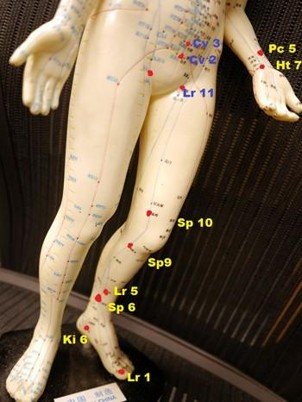 Common acupoints for itchy vulva |
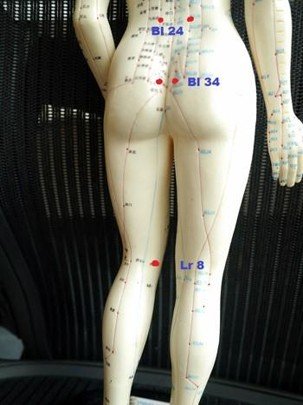 Common acupoints for itchy vulva |
Relief Tips for Itchy Vulva
Like itching in other regions, good personal habits are very important, which can protect the genital region, promote healing as well as avoid unnecessary irritations to cause further damages. For whatever the causes, some measures are very helpful to alleviate the discomfort:
- Avoid scratching and rubbing: Scratching or rubbing can worsen itching and increase the risk of complications such as skin thickening, excoriation, bleeding, and infection. Keep fingernails trimmed and consider wearing cotton gloves at night to prevent scratching during sleep.
- Keep the area dry and cool: Wear loose-fitting cotton underwear and avoid tight clothing and synthetic fabrics whenever possible. At home or while sleeping, removing underwear may help improve comfort and ventilation.
- Clean gently: Wash the genital area with lukewarm water and rinse off any soap, shampoo, or cleansing products thoroughly. Avoid vigorous scrubbing and excessive washing, as both can aggravate symptoms.
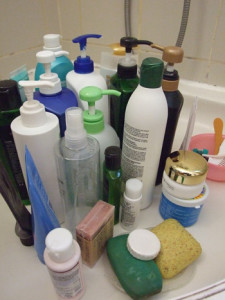
When bathing, be sure to rinse the soaps or chemical cleansers off thoroughly.
- Practice gentle hygiene: Use soft, fragrance-free, and dye-free toilet paper. After using the toilet, wipe from front to back to help prevent contamination of the genital area.
- Avoid potential irritants: Choose feminine hygiene products, lubricants, and topical creams carefully, as some may contain ingredients that cause irritation or allergic reactions. Discontinue use if symptoms worsen.
- Get adequate rest: Avoid activities that may irritate the vulvar area, such as sexual intercourse, cycling, swimming, or horseback riding, until symptoms improve.
- Maintain a healthy diet: Eat a balanced diet that includes plenty of fruits, vegetables, yogurt, and whole grains to support recovery. Drinking adequate amounts of water is also recommended.
Chinese Dietary Advice for Itchy Vulva
A healthy diet can have a positive impact on skin health, as many skin conditions may reflect internal imbalances within the body. A well-balanced diet provides essential nutrients, supports the body’s natural detoxification processes, and promotes tissue repair, all of which can aid skin healing and recovery.
From a TCM perspective, vulvar itching is commonly associated with either a damp-heat pattern or a yin deficiency pattern, and dietary management should be adjusted accordingly. In addition, all patients are advised to avoid smoking, alcohol, strong tea, coffee, seafood, and spicy or highly stimulating foods, as these may worsen itching and interfere with the healing process.
Individuals with a damp-heat pattern often have profuse vaginal discharge, local dampness, redness, or swelling of the vulvar area. To avoid aggravating dampness and heat, they should reduce their intake of fried, oily, and sugary foods. Foods traditionally considered beneficial for clearing heat and promoting the elimination of dampness include Chinese yam, coix seed (Job’s tears), mung beans, celery, chrysanthemum tea, amaranth, winter melon, watermelon, adzuki beans, water chestnuts, and seaweed.
Those with a yin deficiency pattern commonly experience vulvar dryness, burning sensations, or recurrent itching. Foods that nourish yin and moisten dryness may be helpful, such as milk and dairy products, soy milk, soy products, eggs, fish, Chinese yam, lotus seeds, red dates, lily bulbs, longan fruit, apples, pears, bananas, peaches, sesame seeds, nuts, glutinous rice, mushrooms, and honey.
 A nourishing soup with carrot, corn, white fungus and pork ribs. |
 Kelp and mung bean porridge |
Here are simple healthy recipes for itchy vulva in women:
Kelp and mung bean congee
Prepare kelp (30g), mung bean (30g), rice (100g) and sugar (20g). Cook the ingredients with 1500ml of water, bring to a boil quickly, then simmer under low heat, when the liquid turns thick, turn off the heat. Serve warm in the morning and evening. This helps clear heat, detoxify and induce urination, which are beneficial to damp type itchiness.
Coix seed and red date congee
Prepare coix seed (30g), red dates (10 pieces) and rice (50g). Cook the ingredients with 1500ml of water, bring to a boil quickly, then simmer under low heat, when the liquid turns thick, turn off the heat. Serve warm in the morning and evening. This helps clear heat, and regulate vaginal secretion which are beneficial to damp type itchiness.
Fleeceflower root, mulberry and sesame congee
Prepare fleeceflower root (30g), mulberry fruit (10g), black sesame powder (10g) and rice (50g). Boil the fleeceflower root and mulberry fruit to make a 200ml of herbal solution first, then use the solution, and other two ingredients to cook as congee. This helps enrich blood and nourish yin, which are beneficial to those with dry type itchiness.
Three-nut drink
Prepare gingko nut (10 pieces, peeled), coix seed (50g) and wax gourd kernel (50g, peeled). Boil the ingredients with 750ml of water, turn off the heat when the liquid remains 200ml, serve hot, and drink daily. This drink helps arrest genital secretion and remove odor, and eliminate irritations of the private part, which are beneficial to damp type itchiness.
Turtle fish and glabrous greenbrier rhizome stew
Prepare one soft-shelled turtle fish (about 450g), fresh glabrous greenbrier rhizome (250g), and fresh ginger 3 pieces. Chop the fish into big pieces, remove the outer membrane, head and paws, blanch in boiling water and drain, marinate with rice wine, and soy sauce; chop the herb and boil with 1500ml of water to make a solution; heat up about one tablespoon vegetable oil in a pot, add in the ginger to stir a while, then add in the fish pieces and keep stirring for one more minute, pour in the solution, bring to a boil and turn to low heat to simmer for 2 hours, season to taste. Serve warm, drink the soup and eat the meat. This is suitable for all itchy vulva conditions.
Self-help measures alone are usually not sufficient for severe vulvar itching. Consulting a healthcare professional is the best way to ensure appropriate management and recovery.
Further Readings:
Holistic concept Twelve regular meridian TCM organs Blood Qi (vital energy) Diagnostic methods Tongue study Pulse study Acupuncture techniques Body types Food properties

