 English


- Causes of Itchy Scrotum
- Self-Care for Itchy Scrotum
- Chinese Herbal Prescriptions for Itchy Scrotum
- External Herbal Remedies for Itchy Scrotum
- Chinese Dietary Advice for Itchy Scrotum
Itching of the scrotum is usually not a serious condition, but it is a common and often embarrassing problem among men. The scrotum is a muscular sac that contains and protects the testicles, blood vessels, and spermatic cords. Its skin is thin, sensitive, and highly folded, with numerous sweat and oil glands. These characteristics make the scrotum particularly prone to irritation, excessive moisture, and infections.
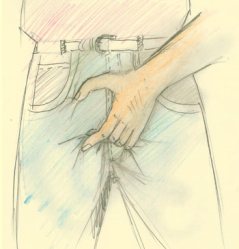
For whatever reason of an itchy scrotum, good personal hygiene is critical.
Causes of Itchy Scrotum
Itchy scrotum can result from a variety of causes, many of which are similar to those responsible for itching elsewhere on the body. Complete relief usually depends on identifying and treating the underlying cause. Common causes of an itchy scrotum include:
- Fungal infections: Jock itch (tinea cruris) thrives in the warm moist groin area. It causes a red, scaly, itchy rash with clear borders that may spread to the inner thighs or buttocks but rarely affects the scrotum or penis. Most cases improve with antifungal treatment.
- Parasitic infections: Pubic lice and scabies can cause intense itching and skin irritation in the genital region.
- Skin conditions: Eczema, seborrheic dermatitis, psoriasis, heat rash, and dry skin (especially in older adults) may lead to groin itching.
- Allergies and irritants: Soaps, detergents, disinfectants, condoms, and tight or rough clothing can irritate sensitive genital skin.
- Yeast infections: Overgrowth of Candida albicans can cause genital irritation, redness, and itching.
- Sexually transmitted diseases (STDs): Genital herpes may cause itching or pain before blisters appear, while genital warts can sometimes cause itching, discomfort, or bleeding.
- Systemic diseases and stress: Conditions such as diabetes, HIV/AIDS, hepatitis, chickenpox, and cancer may increase the risk of itching. Stress and anxiety can also worsen symptoms.
Self-Care for Itchy Scrotum
Proper hygiene and skin care can help relieve symptoms and prevent recurrence:
- Avoid scratching: Scratching can worsen irritation, damage the skin, increase the risk of infection, and spread certain skin conditions.
- Avoid irritants: Stay away from fragranced soaps, harsh cleansers, creams, tight underwear, and synthetic fabrics that may irritate sensitive skin.
- Keep the area clean and dry: Wash the genital area daily with mild soap and lukewarm water, then dry thoroughly. Avoid hot baths and harsh soaps, which can aggravate itching.
- Change underwear regularly: Wear clean underwear daily and change promptly after sweating or exercise. Wash clothing and towels after each use.
- Protect against infection: Avoid walking barefoot in public showers, locker rooms, and swimming pools, and do not share towels or personal items.
- Wear loose-fitting cotton clothing: Cotton underwear helps reduce moisture and friction. Antifungal powder may help keep the groin area dry when needed.
- Manage stress: Stress can worsen itching. Adequate hydration, regular exercise, and relaxation techniques may help.
- Use antifungal creams when appropriate: If jock itch is suspected, over-the-counter antifungal creams may be effective. Treat athlete’s foot promptly to prevent reinfection of the groin area too.
For the best results, it is important to obtain an accurate diagnosis and treat the underlying cause of the itching appropriately. Recurrent or chronic cases may become resistant to conventional treatments and often require a more comprehensive approach.
Traditional Chinese Medicine (TCM) has a long history of managing various skin disorders. By addressing underlying pattern imbalances and improving the body’s overall condition, TCM therapies may help relieve persistent scrotal itching, reduce recurrences, and support long-term symptom control. For some individuals with chronic or treatment-resistant symptoms, TCM may offer a useful complementary approach with relatively few side effects when prescribed by a qualified professional.
Chinese Herbal Prescriptions for Itchy Scrotum
From a holistic TCM perspective, the male genital region is closely linked to the body’s internal organs and meridian system. The area is primarily influenced by the Liver Meridian, while the Conception Vessel and Governor Vessel also play important regulatory roles. In addition, the Bladder and Small Intestine are associated with urinary function, and the Kidneys govern reproductive health.
TCM believes that scrotal itching and rashes result from a combination of internal imbalances and external triggers. Internal pathological changes such as damp-heat, toxic heat, or blood deficiency may make the genital area more vulnerable to irritation. When external pathogenic factors affect the area, symptoms such as itching, redness, and rash can develop.
TCM treatment focuses on both correcting the underlying imbalance and relieving local symptoms. Depending on the pattern diagnosis of individuals, physicians may use a combination of herbal decoctions and topical herbal remedies to reduce irritation, promote skin healing, and help prevent recurrence. This integrated approach aims to support overall recovery rather than simply suppressing symptoms. During a consultation, physicians will check in details about the local changes and the whole body signs. Below are the common disharmony patterns of itchy scrotum and the anti-itch herbal remedies.
 Atractylodes rhizome |
 Amur corktree bark |
 Garden burnet root |
Damp-heat accumulated in lower burner
The scrotal skin is red and inflamed, with papules and small fluid-filled blisters accompanied by intense itching. Scratching may cause the lesions to rupture and ooze fluid, resulting in moist, weeping patches that can spread and merge. In severe cases, profuse yellowish discharges may be present. The tongue is red and covered by yellow and greasy coating, and the pulse is thready and rapid.
Treatment principle should aim to purge damp-heat in the liver and gall-bladder.
Sample prescription: modified Gentian Liver-Purging Decoction plus sopora root, paniculated swallow-wort root
Yin deficiency and blood dryness
The scrotum is very itchy and uncomfortable, causing restlessness. The skin becomes thick and rough from repeated scratching and may bleed or develop scabs. The condition is long-lasting and may be accompanied by thirst and irritability, a red tongue, and thready and rapid pulse.
Treatment principle should aim to enrich blood and disperse wind.
Sample prescription: modified Four-substance Decoction plus cicada slough, ledebouriella root
Coldness and dampness in lower burner
The scrotum feels damp with mild itching. Individuals may accompany with weakness and soreness in the hips and knees, a heavy sensation in the lower abdomen, urinary difficulty, and heaviness and swelling of the lower legs. The tongue is covered by white and glossy coating, and the pulse deep, slow and forceless.
Treatment principle should aim to warm meridians, dispel coldness and dampness, and stop itching.
Sample prescription: modified Five-accumulation Powder
External wind and heat attacking
The groin area is dry and itchy, which feel alleviated by moistening. In serious cases, it appears red small bumps, with numbing and tickling sensations. When ruptured by scratching, the skin surface oozes yellow discharges and has burning pain. The tongue has thin yellow coating, and the pulse is taut and rapid.
Treatment principle should aim to disperse wind, clear heat and stop itching.
Sample prescription: modified Wind Dispersing Powder plus honeysuckle flower, weeping forsythia capsule, red peony root
External Herbal Remedies for Itchy Scrotum
TCM external treatments work directly on the affected skin and can help relieve itching, soothe irritation, and support healing. Common methods include washing, soaking, topical application, and herbal steaming.
Herbal remedies are selected according to specific symptoms of individuals and may help clear heat, remove dampness, improve circulation, nourish dry skin, and relieve itching. An experienced TCM physician will choose the most suitable treatment for each case.
- Sopora root (25g), schizonepeta herb (25g), cicada slough (25g), atractylodes rhizome (25g), common cnidium fruit (25g).
- Amur corktree bark (30g) and garden burnet root (30g); the decocted solution can be used for compress in oozing skin lesion.
- Sopora root (10g) and pricklyash peel (10g); for the early eruption of scrotal rash with redness and oozing, soak in the decocted solution.
- Cnidium Fruit Decoction is suitable to itchy condition with thickened, rough and darkened skin lesion.

Cnidium fruit decoction
Application: Soak the herbs in water for 20 minutes, then simmer them to make about 2 liters of herbal decoction. Pour the liquid into a basin and steam the genital area first while the decoction is still warm. Once it has cooled to a comfortable temperature, use it as a sitz bath.
For best results, use twice daily, morning and evening, for about 30 minutes each time, and continue for 3-5 days. After treatment, gently pat the area dry and apply a thin layer of protective ointment if needed.
- Talc (30g), processed alum (20g) and dictamnus root bark (30g); process in fine powder mixture and store in a container. Dust on the groin area twice a day. This topical remedy helps reduce inflammation, arrest sweating and stop itching.
- Indigo cream: natural indigo (6g), calcined gypsum (12g), talc (6g) and amur corktree bark (6g), gallnet of Chinese sumac (6g) and Vaseline (100g). Grind the herbs into a fine powder and mix with petroleum jelly (Vaseline) to make an ointment. This topical remedy helps moisturize the skin and relieve itching, and is particularly suitable for dry, cracked scrotal skin with itching.
Chinese Dietary Advice for Itchy Scrotum
Since internal disharmony plays an important role for the development of itchy conditions, TCM physicians always suggest their patients follow some dietary rules so as to ensure a full recovery.
Individuals with itchy scrotum should keep a plain and easily digested diet; recommended foods include leafy greens and vegetables such as spinach, celery, cucumber, lettuce, Chinese cabbage, winter melon, and corn, as well as watermelon, adzuki beans, mung bean sprouts, chrysanthemum tea, crucian carp, and carp, which help prevent damp-heat accumulating inside the body.
Foods should be limited or avoided include fried, greasy, spicy, and overly rich foods, as well as alcohol, tobacco, coffee, and strong tea. It is also advisable to avoid foods that may aggravate skin conditions, such as certain seafood (especially scaleless fish and shellfish), strong-flavored meats (e.g. lamb and venison), cold foods, and pungent raw ingredients such as coriander, onions, garlic, chives, and ginger, particularly during acute flare-ups. Here are some simple healthy recipes:

Coix seed and couch grass rhizome soup
- Coix seed (100g), and fresh couch grass rhizome (10g); first decoct the couch grass rhizome for 30 minutes to make a 1000ml solution, then use the solution and coix seed to cook as porridge. Consuming regularly is beneficial to cool blood, disperse dampness and stop itching.
- Fresh couch grass rhizome (30g), oriental water-plantain rhizome (15g), mung bean (50g) and rock sugar (20g); first decoct the two rhizomes for 30 minutes to make a 1000ml solution, then use the solution, mung bean and sugar to cook as porridge. Consuming regularly is beneficial to detoxify, disperse dampness, reduce skin inflammation and stop itching.
- Fresh Chinese yam (200g), poria (100g), red dates (100g), and honey (30g); steam the Chinese yam and then squashed, mince the red dates and remove the stones, grind the poria into powder, mix them together and steam as cake. When serving, pour the honey on the cake. This cake helps invigorate spleen, disperse dampness, nourish yin and moist dryness, which are beneficial to itchy conditions accompanied with thicken, dry and rough skin lesion.
Further Readings:
Holistic concept Twelve regular meridian TCM organs Blood Qi (vital energy) Diagnostic methods Tongue study Pulse study Acupuncture techniques Body types Food properties

