 English


- Self-care and Prevention for Anal Itching
- Causes of Itchy Anus
- Chinese Herbal Prescriptions for Itchy Anus
- External Herbal Remedies for Itchy Anus
- Acupuncture Therapy to Stop Anal Itching
- Chinese Dietary Advice for Anal Itching
Anal itching is a common and uncomfortable condition. It usually occurs when the skin around the anus becomes irritated or inflamed and may be accompanied by a burning sensation or pain. Repeated scratching can damage the skin and make the itchiness worse, so proper self-care is an important part of relieving symptoms.
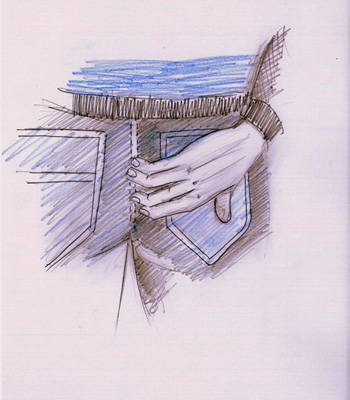
When anal itching appears, it is necessary to do some self-care measures for symptom relief.
Self-care and Prevention for Anal Itching
- Avoid scratching: Be aware of the itch-scratch cycle. Scratching may provide temporary relief, but it often makes the condition worse. Many people scratch unconsciously during sleep, so it is advisable to keep fingernails short and consider wearing cotton gloves at night. If itching is severe, consult a doctor about whether antihistamine may be appropriate.
- Keep the area clean: Gently rinse the anal area after bowel movements to remove any residual stool that may irritate the skin. Avoid excessive washing, vigorous scrubbing, or rubbing, as these can worsen irritation and itching. Unscented moist wipes or baby wipes are often gentler than dry toilet paper.
Reduce irritations: Products such as scented soaps, talcum powder, bubble baths, deodorants, and disinfectants may irritate the sensitive skin around the anus. Washing with water and a mild, fragrance-free soap is usually sufficient to keep the area clean. - Keep the area dry: Change underwear daily and wear loose-fitting clothing to reduce moisture buildup. Tight clothing and prolonged sitting can increase sweating and irritation. If excessive moisture is a problem, a non-medicated, fragrance-free drying powder may help.
- Over-the-counter (OTC) products: Various OTC creams, ointments, and gels are available to help relieve anal itching. Apply a thin layer as directed. These products are generally intended for short-term use only, as some ingredients may irritate the skin or worsen symptoms if used excessively.
- Maintain regular bowel habits: Irregular bowel movements, diarrhea, or hard stools can delay healing and aggravate anal itching. A diet rich in fiber and adequate fluid intake can help promote healthy bowel function. Certain foods and beverages, such as spicy foods, coffee, beer, and dairy products, may trigger symptoms in some individuals. If a particular food appears to worsen your symptoms, consider limiting or avoiding it. Gas-producing foods may also be reduced if they contribute to discomfort.
In general, anal itching is a common and usually non-serious condition. The medical term for this problem is pruritus ani, which refers to persistent itching around the anus and a strong urge to scratch. Symptoms often become worse at night or after passing stool. Heat, sweating, tight clothing, and stress can also trigger or worsen the itching.
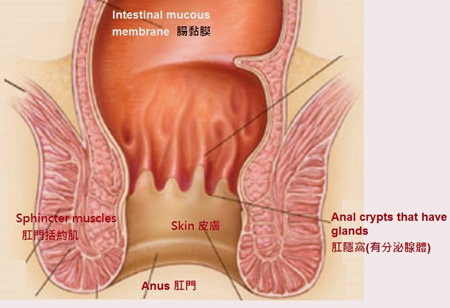
Structures of the anus
Causes of Itchy Anus
Persistent anal itching can have many different causes. A thorough medical evaluation is important for identifying the underlying cause and achieving long-term relief. If anal itching persists for more than one or two months, or is accompanied by rectal bleeding, consult a healthcare professional promptly.
Some conditions that may require medical attention include:
- Anal conditions: Hemorrhoids, anal fissures (small tears in the anal skin), anal fistulas (abnormal tunnels connecting the anal canal to the surrounding skin), skin tags, and anal or colorectal tumors.
- Skin conditions: Psoriasis, eczema, dermatitis, and other skin disorders can affect the area around the anus and cause itching.
Infections: Herpes, sexually transmitted infections (STIs), scabies, fungal infections, and parasitic infestations such as threadworms (pinworms). - Systemic diseases: Conditions associated with generalized itching, including diabetes, liver disease, lymphoma, anemia, and thyroid disorders, may sometimes cause particularly intense itching around the anus.
- Medication side effects: Certain medications, including antibiotics and corticosteroids, may contribute to diarrhea, fecal leakage, or yeast infections, which can irritate the anal area and trigger itching.
With appropriate treatment and self-care measures, most anal itching can be resolved successfully. However, even after months of active treatment, a few individuals are likely to have anal itching again. Management on an ongoing basis is thus required for them, traditional Chinese medicine (TCM) can be part of the management.
Chinese Herbal Prescriptions for Itchy Anus
From a TCM holistic view, anal condition is associated with internal organs. The anus is the lower exit of the large intestine, and is responsible for excreting digestive wastes; the spleen plays an important role in stool formation; the kidney dominates the opening and closing of the anus; and meridians of the large intestine and the lungs pass through the anal region. All of them can affect the anus to function.
It is claimed that development of anal itching has both internal and external origins. Individuals are usually in a disharmony state such as damp-heat accumulation, organ weakness or blood deficiency that makes the anal region susceptible to external irritations. When external pathogens take advantage to stimulate the anus, itching will develop. TCM physicians will check the patients in detail and identify a disharmony pattern for diagnosis. The remedies are designed to resume internal harmony and eliminate local pathologies.

TCM treatment for anal problems is mainly oral prescriptions, however due to specific location and structure of the anus, topical applications are usually combined. Purging damp-heat and replenishing blood and qi (vital energy) are two important therapeutic principles for anal problems.
Below are common disharmony patterns of anal itching and the herbal remedies:
External wind heat invasion
An acute onset, individuals typically experience intense anal itching accompanied by a burning sensation, which is aggravated by heat. The affected skin appears red and inflamed, with poorly defined lesion borders. Other commonly associated symptoms include irritability, a bitter taste in the mouth, constipation, and dark yellow urine. The tongue coating is yellowish, and the pulse is rolling or rolling and rapid.
Treatment principle should aim to disperse wind and clear heat.
Sample prescription: modified Four-substance Wind Dispersing Drink
Blood deficiency generated wind and dryness
This pattern often occurs in longstanding cases; individuals may experience intense and persistent anal itching. The affected skin often becomes dry, thickened, and less elastic, with scaling and fissures. Scratch marks and blood crusts may also be present as a result of repeated scratching. Accompanying symptoms may include dry mouth and tongue, weight loss, and disturbed sleep. The tongue looks red, and the pulse is thready and rapid.
Treatment principle should aim to nourish blood and disperse wind.
Sample prescription: modified Angelica Root Drink
Damp-heat accumulated in anus
Individuals present with anal itching associated with moisture and discomfort or pain around the anus. Symptoms are often aggravated by physical activity or scratching. Other accompanying features may include a sensation of anal heaviness or prolapse, fatigue, abdominal distension, and reduced appetite. The tongue is red with yellow greasy coating, and the pulse is rolling and rapid.
Treatment principle should aim to clear heat and dispel dampness.
Sample prescription: modified Wind Dispersing Powder plus Two-Wonder Powder
External Herbal Remedies for Itchy Anus
Traditional external therapies focus on treating the affected area directly. Common ways of application include herbal washes, sitz baths, ointments, and steam treatments. The therapies may help improve blood circulation, soothe irritated skin, relieve itching, and support skin healing. Herbal medicines are chosen according to the individual’s symptoms and skin condition. Depending on the diagnosed disharmonys of anal itching, treatment may aim to reduce heat and dampness, improve circulation, moisturize dry skin, or relieve itching.
- Sopora root (15g), processed alum (3g), belvedere fruit (10g), arnebia root (10g), natural indigo (10g), wild chrysanthemum (10g). After decocted, add 10ml of rice vinegar into the solution.
- Sopora root (30g), common cnidium fruit (20g), Dahurian angelica root (12g), wild chrysanthemum (20g), amur corktree bark (20g), belvedere fruit (20g), acorus (15g) and honeysuckle flower (15g); for newly developed cases add in pricklyash peel (10g) and borneol (5g, dissolve directly in the decoction); for chronic and persistent cases add in angelica root (10g), sessile stemona root (10g) and dried tangerine peel (10g). This is suitable for anal itching with skin rash.
- Chinese rhubarb root, duckweed, sopora root, garden burnet root, schizonepeta herb, and common cnidium fruit, for 30g each. This is suitable for wet anal itching.
- Duckweed, Siberian solomonseal rhizome, sessile stemona root, argy wormwood leaf, and Dahurian angelica root, for 30g each; pricklyash peel (10g). This is suitable for anal itching with dry and rough skin changes.
- Angelica root, fleeceflower root, ledebouriella root, puncturevine caltrop fruit, common cnidium fruit, belvedere fruit and dictamnus root bark, for 30g each. In case if the localized skin is thickened and darkened, add red peony root and common burreed tuber for 30g each.
Application: Before use, soak the herbs for 20 minutes, then decoct them for another 20 minutes to obtain approximately 2,000 mL of herbal liquid. While the decoction is still warm, use the steam to fumigate the anal area for 10-15 minutes. Once the liquid has cooled to a comfortable temperature, take a sitz bath for about 10 minutes.
Afterward, gently pat the area dry and apply a thin layer of protective preparation. For dry-type lesions, Indigo Ointment (qing dai gao) or Lian Huang Ointment may be used. For moist or weeping lesions, Calamine Lotion is recommended.
The treatment should be carried out twice daily, once in the morning after a bowel movement and again before bedtime. Each dose of the herbal decoction may be reused two to three times.
Acupuncture Therapy to Stop Anal Itching
Acupuncture may help relieve anal itching by reducing local irritation and promoting the body’s natural healing processes. According to TCM theory, acupuncture also helps regulate the functions of the internal organs and improve the flow of qi through the meridians. It is generally considered safe treatment when performed by a qualified professional and is associated with few side effects. Below are two acupuncture protocols commonly used for anal itching.
Protocol (I)
Selected body points: er bai (Ex-ue2), shen shu (Bl 23), da chang shu (Bl 25), pi shu(Bl 20), chang qiang (Gv 1), cheng shan (Bl 57), and tai xi (Ki 3). Applied even techniques and once daily, with 12 treatment sessions constituting one course of therapy.
Protocol (II)
Selected body points: chang qiang (Gv 1), qu chi (Li 11), san yin jiao (Sp 6), xue hai(Sp 10), and he gu (Li 4). Applied with reduction techniques and retained the needles for 10~15 minutes each time. Stimulated once daily, with seven treatment sessions constituting one course of therapy.
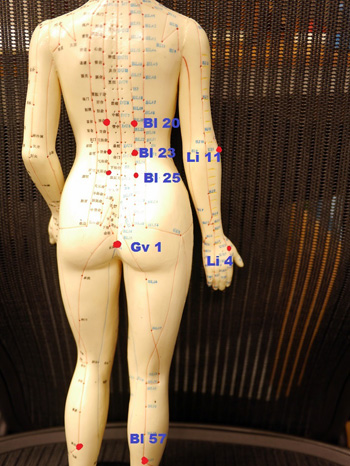 Acupuncture points for itchy anus |
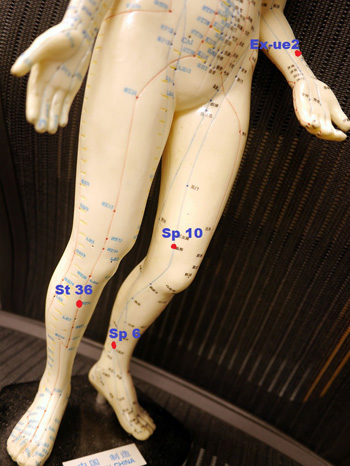 Acupuncture points for itchy anus |
Chinese Dietary Advice for Anal Itching
Diet plays an important role in the management of anal itching. Certain foods, including tomatoes, chocolate, citrus fruits, spicy foods, coffee, tea, beer, and dairy products, may trigger or worsen symptoms in some people. Since individual responses vary, it is helpful to identify and avoid any foods that appear to aggravate the condition. Other helpful measures include having regular bowel movements, staying well hydrated, keeping stress under control, and avoiding activities or habits that put excessive pressure on the abdomen. These steps may help relieve symptoms and reduce the risk of recurrence.
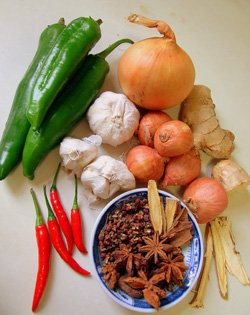
From a TCM perspective, anal itching is mostly associated with wind, dampness and heat irritations that usually pass down from the digestive tract. The pathogens can easily be generated and accumulated when the spleen and stomach are under-functioning. It is advised to keep the daily meals light, easy to digest, and adequately hydrated. Eating regular meals at consistent times and in appropriate portions can help reduce the workload of the digestive system. Spicy and hot property foods like pepper, chili pepper, garlic, onion, leek, ginger, coriander and mutton should be limited. Cigarettes, wine, greasy or deep fired, frozen and uncooked, herbal tonics and gas producing foods should also be cut. Foods like water chestnut, mung bean, purslane, loofah, wax gourd, white fungus, pumpkin, lotus root, sugar cane, fig, banana and fish help cleanse the digestive tract and regulate the bowel movements, which are beneficial.
 |
 |
Individuals with itchy anus should limit the consumption of hot spicy, dehydrated, deep fired or greasy food.
Below are some healthy recipes for anal itching:
- Prepare honeysuckle flower (3g), couch grass rhizome (15g), and coix seed (200g). First, decoct the honeysuckle flower and couch grass rhizome for 20 minutes to make a juice, then cook the juice, coix seed with 1000ml of water in low heat, when the coix seed is tendered and the liquid becomes thick, turn off the heat and serve in warm.
- Prepare mung bean (30g) and dried lily bulb (30g), boil with water to make a sweet dessert.
- Prepare coix seed (5g), and ten pieces of water chestnut (peeled and finely chopped), boil with water to make a sweet soup.
- Prepare mung bean (60g), and liquorice root (5g), boil to drink.
- Fresh reed rhizome (100g), squeeze juice and drink several times a day.
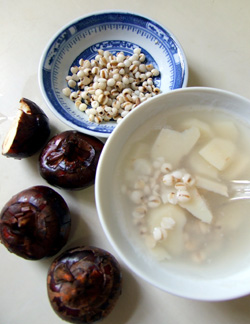 Coix seed and water chestnut sweet soup |
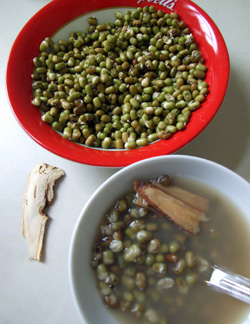 Mung bean and liquorice root drink |
Further Readings:
Holistic concept Twelve regular meridian TCM organs Blood Qi (vital energy) Diagnostic methods Tongue study Pulse study Acupuncture techniques Body types Food properties

