 English

- Chinese Herbal Prescriptions For Scalp Itching
- Herbal Washes and Topical Remedies for Scalp Itching
- Chinese Health Tips for Scalp Itching
An itchy scalp is a common complaint that can affect everyday life and confidence. It may result from scalp conditions such as dandruff, dry skin, allergies, eczema, or infections, although sometimes no definite cause can be found. You should consult a dermatologist if you notice warning signs such as excessive dandruff, fluid discharge, redness, swelling, pain, thickened patches of skin, hair loss, or skin problems affecting other parts of the body. A professional assessment can help identify the underlying cause and ensure proper treatment.
If scalp disorders and other medical conditions have been ruled out, but you still experience frequent scalp itching, it may be worth considering whether your daily habits are contributing to the problem. In general, people with thicker hair and relatively low oil production do not necessarily need to wash their hair every day. The scalp naturally produces oils that form a protective barrier, and excessive washing can disrupt this balance, leaving both the scalp and hair more prone to dryness and damage. During dry weather, especially in autumn and winter, reducing the frequency of hair washing may help prevent scalp irritation and itching.
On the other hand, washing the hair too infrequently or cleaning it inadequately can also lead to problems. The buildup of scalp oil, sweat, and dead skin cells may cause itching and promote the formation of dandruff. People with fine hair, excessive oil production, heavy sweating, or those living in humid environments may need to wash their hair more frequently to keep the scalp clean. Some individuals may also develop scalp sensitivity or itching after using hair styling or setting products. Therefore, it is important to pay attention to how your scalp reacts when using such products and discontinue them if irritation occurs.
In addition, maintaining a balanced diet, consuming foods rich in B vitamins and zinc, and managing stress and anxiety can all contribute to a healthier scalp and stronger hair. These measures help support the scalp’s natural condition and may reduce the likelihood of itching and other scalp-related problems.
For many people, scalp itching can be effectively managed by using appropriate hair-care products and improving daily habits. However, if the scalp remains persistently itchy despite these measures, and no clear underlying cause can be found, Traditonal Chiese Medicine (TCM) may offer another treatment approach. Rather than focusing solely on the symptom itself, TCM seeks to identify the underlying pattern of imbalance in the body and provide treatment accordingly, with the aim of relieving the itching and improving overall scalp health.
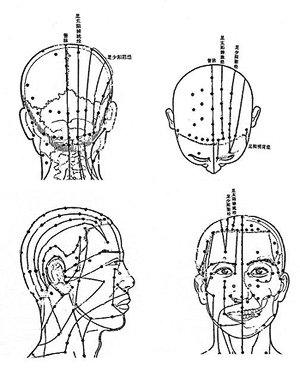
The acupoints and meridians of the head
Chinese Herbal Prescriptions For Scalp Itching
From a TCM holistic view, the head is known as the “confluence of all yang meridians.” Both the twelve regular meridians and the eight extra meridians maintain functional connections with the head. Pathological changes arising from either external pathogenic influences or internal organ dysfunction may impair the circulation of qi (vital energy) and blood within the meridians serving the head region. Such disturbances can manifest as various disorders of the scalp and head, including itching, pain, or other abnormal sensations. TCM claims that itchy scalp may appear in following ways:
- Damp-heat accumulated in the scalp;
- Blood deficiency and over-functioning liver that lead to inadequate nourishment of the scalp.
Physicians will evaluate the scalp’s condition, including the severity and characteristics of the itching, as well as any accompanying symptoms such as dandruff, redness, dryness, excessive oiliness, sleep disturbances, digestive problems, emotional stress, or other signs of imbalance. Based on this comprehensive assessment, an individualized treatment plan is developed according to the principles of TCM pattern differentiation, with the aim of addressing both the underlying cause and the itching itself.
Blood deficiency with excess wind and dryness
The scalp is itchy, dry, and flaky, with scratch marks and blood crusts (scabs). The symptoms often worsen during winter and spring and are more commonly seen in older adults. Accompanying symptoms may include dizziness, insomnia, poor memory, a pale or lusterless complexion, constipation with dry stools, a pale tongue with a thin white coating, and the pulse is taut and slow, or taut and thready.
The remedy should aim to enrich blood, lubricate dryness, disperse wind and stop itching.
Sample prescription: modified Angelica Root Drink plus sour jujube seed and polygala root
Wind and dampness mixing with heat
The scalp is itchy, with scratch marks and blood crusts (scabs). There may also be mild redness, swelling, pain, eczema-like changes, or lichenification (thickened, leathery skin caused by chronic scratching). This pattern is more commonly seen in young and middle-aged adults, and symptoms often worsen during the summer and autumn months. The tongue is red, with a white greasy coating or a thin yellow greasy coating, and the pulse is taut and rolling, or slight rapid.
The remedy should aim to disperse wind, drain away dampness, clear heat and stop itching.
Sample prescription: modified Wind Dispersing Powder, plus amur corktree bark and peony root bark
After the routine treatment, physicians may suggest the patients to take some proprietary Chinese medicines for a period of time, so as to consolidate the therapeutic results and reduce the relapse. For cases with a relatively short disease course and marked wind-heat manifestations, Ledebouriella Powder to Unblock the Superficial may be prescribed; for chronic and stubborn cases, Gentiana Macrophylla Root Pill and Dampness Expelling Pill may be prescribed alternately.
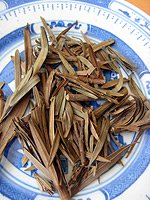 Oriental arborvitae leafy-twig |
 Perilla leaf |
 Caltrop fruit |
Herbal Washes and Topical Remedies for Scalp Itching
External remedies play an important role for the treatment of itchy skin. The remedies can work directly on the scalp to eliminate the irritating pathogens, improve blood circulation, control dandruff, stop itchiness, and ensure the scalp to resume in a balance and healthy condition. For those with a mild itchy scalp, external remedies alone is well enough for relief. For stubborn and intractable itchy scalp, oral remedies usually work together with external remedies, which not only relieve the itchy symptom, but also promote the overall recovery.
The followings are the external anti-itch remedies for itchy scalp:
- Chrysanthemum, mulberry root-bark, aconite root, Jehol ligustium rhizome, pine leaf, vitex fruit, yerbadetajo herb, holy basil and mulberry mistletoes, for 100g each. Process into a coarse mixture, and store in a container. Each time, take 150g of the mixture and decoct to make 1500ml of herbal solution for washing the scalp and hair. This is suitable for dry and itchy scalp with or without dandruff.
- Oriental arborvitae leafy-twig (50g), perilla leaf (50g), caltrop fruit (100g). Process into a coarse mixture, and put in a cotton bag, cook with 1500ml of water for 30 minutes, then filter the solution in another container, and let it cool down. Dip a towel in the solution, cover on the head and massage for a while. Do this in the morning and night. This helps clear heat, lubricate skin, and stop itching, which are suitable for dry itchy scalp.
- Fresh mulberry leaf (250g, juiced) is a folk method to arrest common dandruff. Mix the juice with 1500ml of water, put into the refrigerator to cool for a while, dip in a towel and cover on the head and massage for a while. Do this in the morning and night for three to five days.
- Sopora root, wild chrysanthemum and dictamnus root bark, for 30g each. Decoct a solution and use it for washing hair and scalp, twice daily. This helps eliminate wind, clear heat, detoxify and stop itching, which are suitable for oily and itchy scalp.
- Vitex fruit (60g), ledebouriella root (90g), mulberry mistletoes (90g), gentiana macrophylla root (30g), hemp seed (30g), Dahurian angelica root (120g). Process into a coarse mixture, and store in a container. Each time, take 140g of the mixture and decoct to make 1500ml of herbal solution for washing the scalp and hair. This is suitable for oily scalp with or without dandruff.
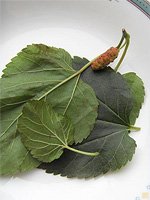
Fresh mulberry leaf
Chinese Health Tips for Scalp Itching
During treatment, people with scalp itching should pay attention to factors that may trigger or worsen the condition, and adopt appropriate scalp-care measures:
- Avoid scratching the scalp or rubbing it with objects, as this often leads to a vicious cycle of “the more you scratch, the itchier it becomes.”
- Moderate exposure to sunlight may help soothe the scalp.
- Maintain a regular daily routine and ensure adequate sleep.
- Relieve stress and exercise regularly.
- Choose mild shampoos and hair-care products, preferably those formulated to relieve itching.
- Minimize the use of hair styling and setting products.
- Follow a light and balanced diet, drink sufficient fluids, and limit sweet, greasy, spicy, or heat-producing foods. Foods such as winter melon, coix seeds (Job’s tears), radish, black sesame seeds, and soybeans are often recommended from a TCM perspective.
- A juice made from celery, tomato, pear, and a small amount of lemon is traditionally recommended as a dietary supplement to support overall wellness and help soothe heat-related symptoms. It can be prepared fresh and consumed once a day.
- Oil-control and anti-itch herbal tea: wolfberry, chrysanthemum, hawthorn fruit and lotus leaf, prepare equal amounts of each ingredient. Grind them into a coarse powder and store in an airtight container for later use. Take about 20g of the herbal mixture daily and infuse it with boiling water as a tea. Drink regularly.

Fresh fruit juices are beneficial to itchy scalp.
Further Readings:
Holistic concept TCM Diagnositic principles Four examining skills Organ systems Six evils Qi & blood Herbal Applications Meridian system

