 English
- Pathological Changes Caused by Stress
- Why Does the Same Stress Affect People Differently?
- An Overview of Stress Responses in Chinese Medicine and Modern Medicine
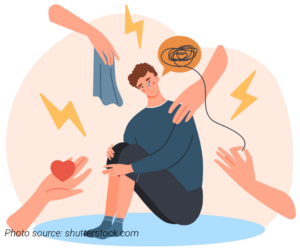
Stress is like an invisible string. When it is pulled too tight, the mind and body begin to send out warning signals. Stress itself is not a disease, but when it becomes chronic and a person lacks adequate coping or recovery, it can gradually progress from functional imbalance to actual physical and psychological harm.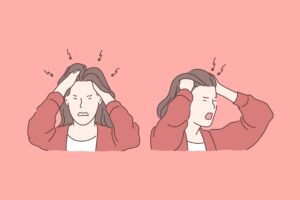
When people are exposed to external stressors, which TCM primarily regarded as disturbances of the Seven Emotions, the body’s qi movement is often affected first. In the early stages, if the liver fails to maintain the smooth flow of qi (vital energy), qi stagnation or rebellious qi may develop. If stress persists, it can gradually weaken internal organs, leading to disharmonies such as disturbed spirit (shen), impaired spleen, or kidney essence deficiency. Over time, these disharmonies may also give rise to pathological changes such as phlegm accumulation and blood stasis. Individuals may eventually manifest as anxiety, insomnia, fatigue, digestive problems, and other mind-body problems.
Pathological Changes Caused by Stress
Generally, TCM believes that stress affects health mainly through the following three pathways:
1. Disruption of qi movements
Pathway: Emotional distress can impair the liver’s ability in qi (vital energy) regulation, leading to disorders in qi movements such as qi stagnation or rebellious qi.
Key symptoms: Chest tightness, frequent sighing, irritability, and emotional frustration. 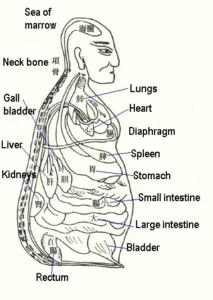
2. Malnourishment of organs
Pathway: Prolonged stress can gradually weaken the heart, spleen, and kidney, resulting in depletion of qi and blood.
Key symptoms: Fatigue, insomnia, poor concentration, low mood, and a pessimistic outlook.
3. Formation of pathological products
Pathway: Prolonged qi stagnation may lead to phlegm formation, while chronic illness can impair the body’s collaterals, resulting in blood stasis. Over time, phlegm and blood stasis work together to further affect both physical and mental functions.
Key symptoms: Mental confusion, difficulty thinking clearly, emotional rigidity, persistent negative thoughts, and mood disturbances.
Why Does the Same Stress Affect People Differently?
People do not respond to stress in the same way. Faced with the same exam, work deadline, or unexpected problems, one person may struggle with insomnia, while another develops digestive problems or becomes irritable and moody. Stress does not affect everyone in the same way because each person has a unique constitution and different areas of vulnerability. TCM explains these differences through three main factors:
1. Body Type Shapes the “Baseline”
Think of stress like a gust of wind, the way you react depends on our body constitutions. For example:
- Qi stagnation type: individuals are more sensitive and prone to worry. Stress tends to disrupt their smooth flow of qi; common related symptoms include chest tightness, frequent sighing, irritability, low mood, and menstrual irregularities.
- Qi deficiency type: individuals are naturally lower in energy and stamina. Stress further drains their body’s resources; common related symptoms include fatigue, sleepiness, poor concentration, and frequent colds.
- Yin deficiency type: individuals tend to feel warm, dry, or easily overheated. Stress can generate excess internal heat; common related symptoms include irritability, severe insomnia, night sweats, dry mouth, and mouth sores.
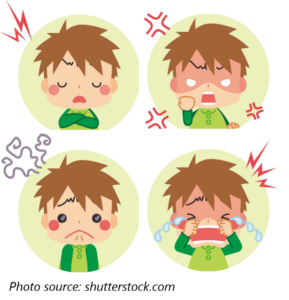
People react to the same stress differently
2. Stress Attacks the Weakest Link
TCM believes stress often affects the body’s most vulnerable system first. For example:
- Weak digestion and absorption: Stress instantly hits your gut (similar to IBS), causing stomachaches, bloating, diarrhea, or poor appetite.
- Weak heart and spirit: Stress disrupts your mental calm, leading to a racing heart, anxiety, panic, or disturbed sleep.
- Weak kidney/liver: Long-term stress drains your fundamental body resources, showing up dizziness, lumber weakness, fatigue, or hair loss.
3. How Qi Movement Gets “Stuck”
Stress can interfere with qi movement in different ways:
- Blocked: Qi stops moving, leading to feel chest tightness, bloating, or a “lump in your throat.”
- Rushing upward: Qi rebels and goes up instead of down. This causes tension headaches, dizziness, nausea, or high blood pressure.
- Sinking: Qi isn’t strong enough to hold things up. This leads to chronic diarrhea, a heavy feeling in the body, or constant sluggishness.
In summary, TCM takes a person-centered approach to stress. While Western medicine often focuses on the stressor itself and the body’s physiological responses, TCM focuses on the individual experiencing the stress. Stress is seen as a trigger, while a person’s constitution and underlying imbalances determine how stress symptoms develop. Therefore, TCM stress management is highly individualized, aiming to replenish deficiencies, restore the smooth flow of qi, and help each person regain their own unique state of balance.
An Overview of Stress Responses in Chinese Medicine and Modern Medicine
Below is a rough comparison between the explanations of stress responses in TCM and modern medicine
Emotional and Cognitive Aspects
| Common Manifestations | TCM Interpretations | Modern Medicine Correspondences |
| Anxiety & tension | Fear disrupts qi movement; liver fails to regulate qi; heart’s spirit becomes unsettled | Sympathetic nervous system activation; elevated cortisol levels |
| Low mood | Qi insufficiency of lung; deficiency of heart qi, or kidney deficiency | Imbalance of serotonin and dopamine |
| Irritability & agitation | Liver stagnation transforms into fire; rebellious qi disturbs the spirit | Reduced prefrontal cortex regulation; overactivation of the amygdala |
| Poor concentration | Spleen deficiency leads to disturbed focus; kidney deficiency weakens willpower; the spirit lacks nourishment | Excessive working memory load; depletion of cognitive resources |
Physical and Physiological Aspects
| Common Manifestations | TCM Interpretations | Modern Medicine Correspondences |
| Insomnia & excessive dreaming | Disharmony between heart and kidney; liver blood deficiency; spirit is not anchored | Dysregulation of the HPA axis; abnormal melatonin secretion |
| Palpitations & chest tightness | Heart qi deficiency, phlegm and blood stasis obstructing collaterals; impaired flow of yang energy in the chest | Autonomic nervous system imbalance; increased cardiovascular load |
| Digestive discomfort | Liver qi stagnation affecting the spleen; disharmony between spleen and stomach; disorder in digestion and transportation process | Gut–brain axis imbalance; alterations in gut microbiota |
| Headache & dizziness | Hyperactivity of liver yang; upward disturbance of qi and blood; phlegm obstructing the clear orifices | Changes in vascular tone; tension-type headaches |
| Unexplained fatigue | Disharmony between heart and kidney; liver blood deficiency; spirit not well supported | HPA axis dysregulation; neuroendocrine imbalance |
Behavioral and Social Aspects
| Common Manifestations | TCM Interpretations | Modern Medicine Correspondences |
| Avoidance and social withdrawal | Deficiency of liver and gallbladder leads to fear; kidney deficiency weakens willpower | Overactivation of the behavioral inhibition system (BIS) |
| Compulsive checking/cleaning | Spleen deficiency with excessive rumination (over thinking) plus impaired decision-making; phlegm and blood stasis disturbing the spirit | Dysfunction in basal ganglia–thalamocortical circuits |
| Appetite changes | Liver qi stagnation affecting the spleen (causing poor appetite); stomach fire causes overeating | Dysregulation of leptin and ghrelin |
| Social avoidance | Heart qi deficiency or lung qi deficiency leads to sadness and withdrawal | Social anxiety; changes in oxytocin system |
TCM views the human body as an integrated whole in which emotions, thoughts, and physical health are closely interconnected. When one aspect falls out of balance, it can influence the entire system.
In today’s fast-paced and stressful world, rather than simply suppressing negative feelings or relying solely on medication, people may benefit from TCM approaches. TCM methods aim to regulate the functions of the internal organs, promote the smooth flow of qi (vital energy) and blood, and calm and nourish the mind and spirit.
By restoring overall balance, TCM seeks to help individuals manage stress more effectively and build greater mental and physical resilience.

