 English


According to traditional Chinese Medicine (TCM), itching can be associated with pathogenic irritations by wind, dampness, heat or blood stasis, that result in disharmony between blood and qi (vital energy) in the superficial body. Itchy symptoms can also be due to blood deficiency that leads to under nourishment of the skin. Disharmony patterns of itchy skin are different from person to person, TCM physicians will use a wild variety of herbs to stop itching, including herbs for dispelling wind, cooling blood, clearing heat, regulating qi, activating blood, calming down, resolving stasis and soothing liver as well. The anti-itch remedies are prescribed according to individual conditions, for either oral intakes or external applications.
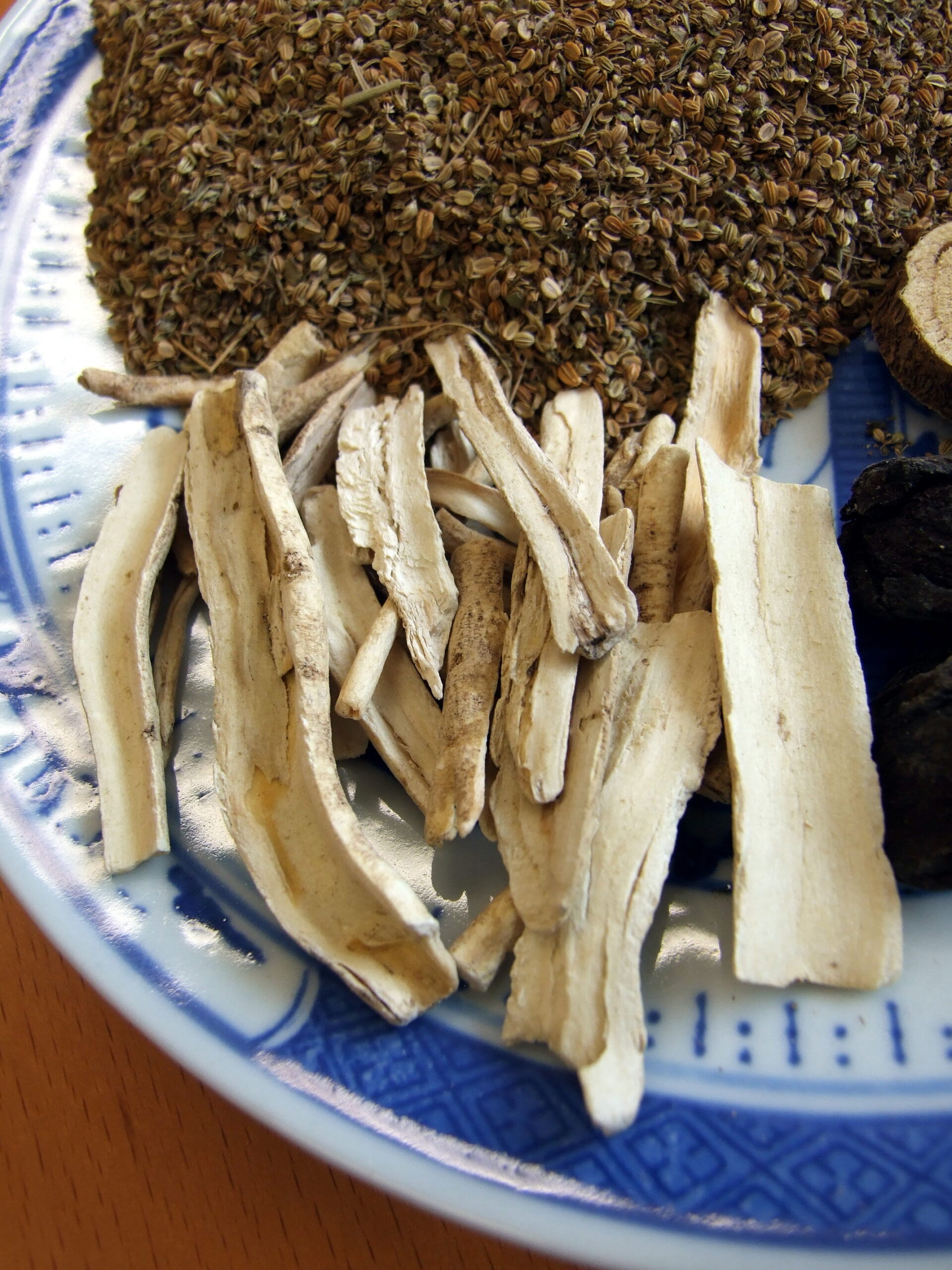
 Dahurian angelica root |
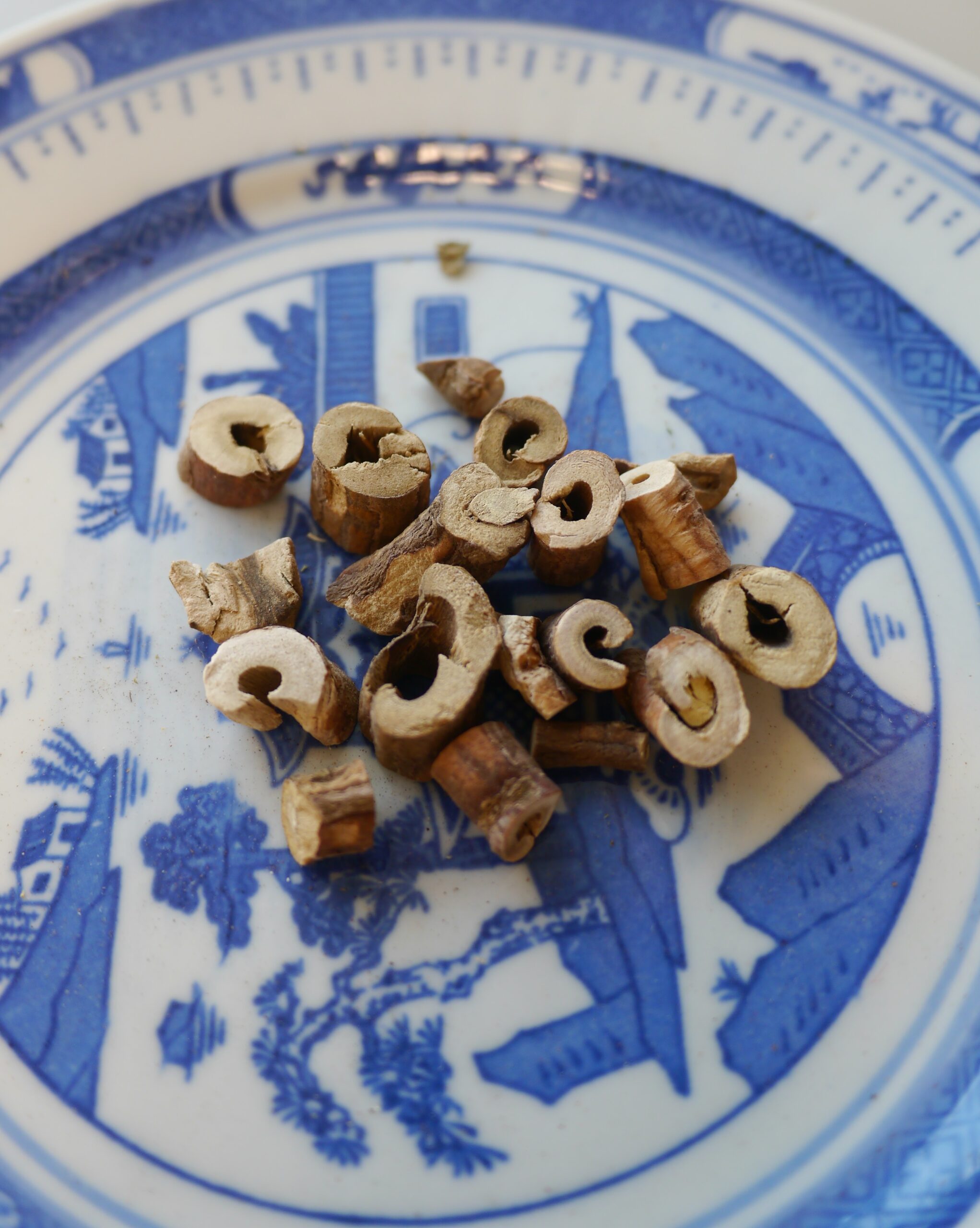
 Dictamnus root bark |
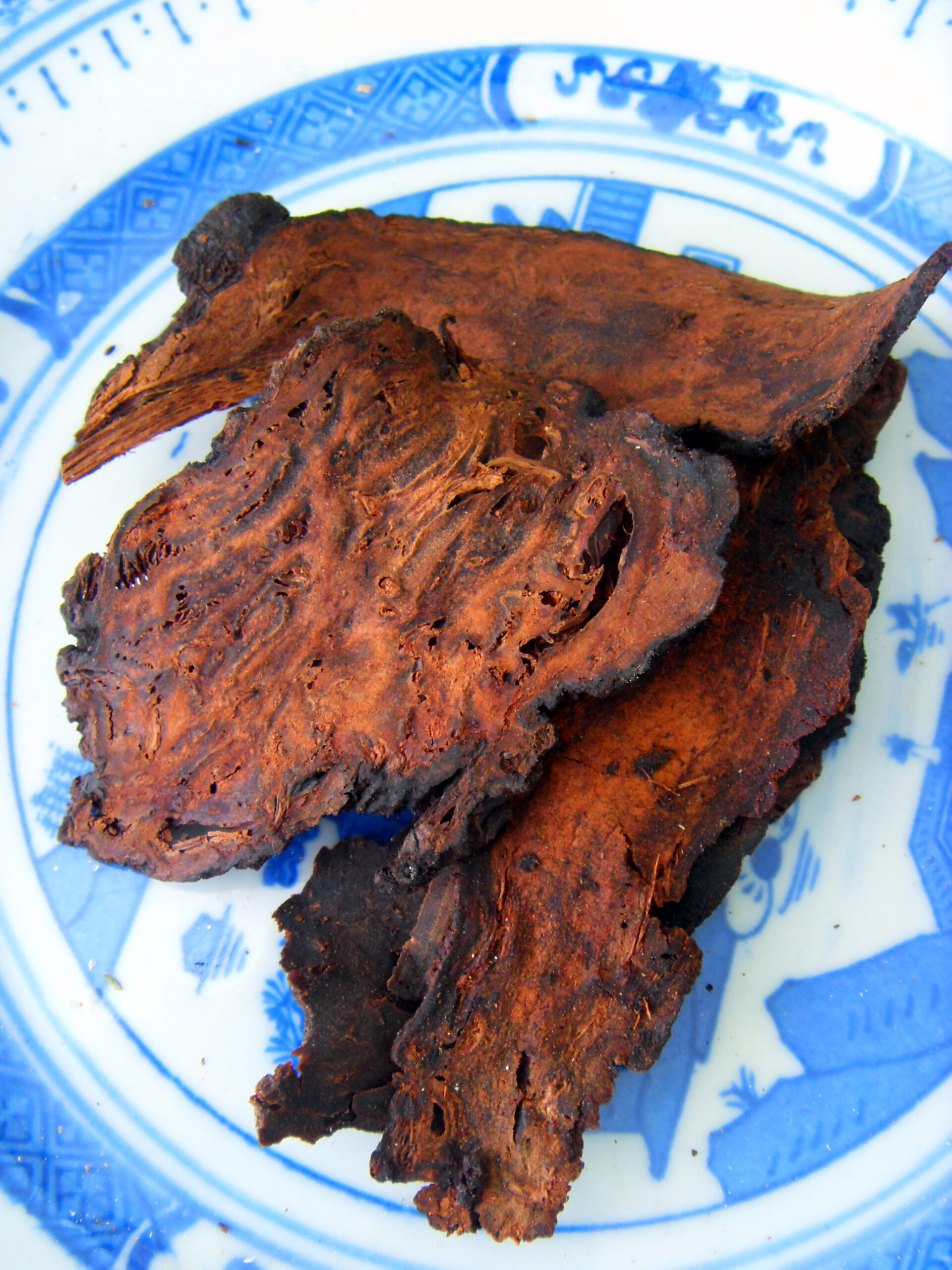
 Peony root bark |
The following are general examples of herbal selections commonly used for different types of itchy skin conditions:
1. Itchy rashes due to wind
Acute itchy rashes that often appear on the head and facial region, or spread all over the body surface. Red color rashes indicate heat pattern, while pale rashes indicate cold pattern.
Therapeutic principle: Dispersing wind to stop itching
Herbal selection: Chrysanthemum, ledebouriella root, schizonepeta herb, Siberian cocklbur fruit
- Accompanied cold signs add: Ephedra, cassia twig, Dahurian angelica root, Manchurian wildginger
- Accompanied heat signs add: Peony root-bark, great burdock fruit, pepper mint, duckweed
2. Heat-related itchiness
Intense itching that moves from place to place rather than remaining in one fixed area. The skin may develop red rashes or patches, accompanied by a burning sensation and prickling itch.
Therapeutic principle: Clearing heat to stop itching
Herbal selection: Unprocessed gypsum, anemarrhena rhizome, figwort root, baical skullcap root, golden thread rhizome, buffalo horn, Chinese gentian root, weeping forsythia capsule
- Toxic heat pattern adds: Gardenia fruit, wild chrysanthemum, honeysuckle flower, dandelion
- Heat-wind pattern adds: Sweet wormwood herb, cicada slough, mulberry leaf, feather cockscomb seed
3. Dryness-related itchiness
Winter-autumn itching, elderly itching, yin deficiency or immune weakened individuals that appear dry and scaly skin.
Therapeutic principle: Boosting internal lubrication to stop itching
Herbal selection: Unprocessed fleeceflower root, Chinese yam, dwarf lily-turf tuber, Cochinchinese asparagus, flat-stem milkvetch seed, rehmannia root, lily bulb, albizia, gambir vine stem, longan aril, black sesame, white peony root, tuber fleeceflower stem, wolfberry root-bark, donkey-hide gelatin
This pattern is commonly seen during menopause. In such cases, herbs that nourish yin and moisten dryness may be selected, such as Chinese yam, albizia bark or flower, and donkey-hide gelatin.
 Fleeceflower root |
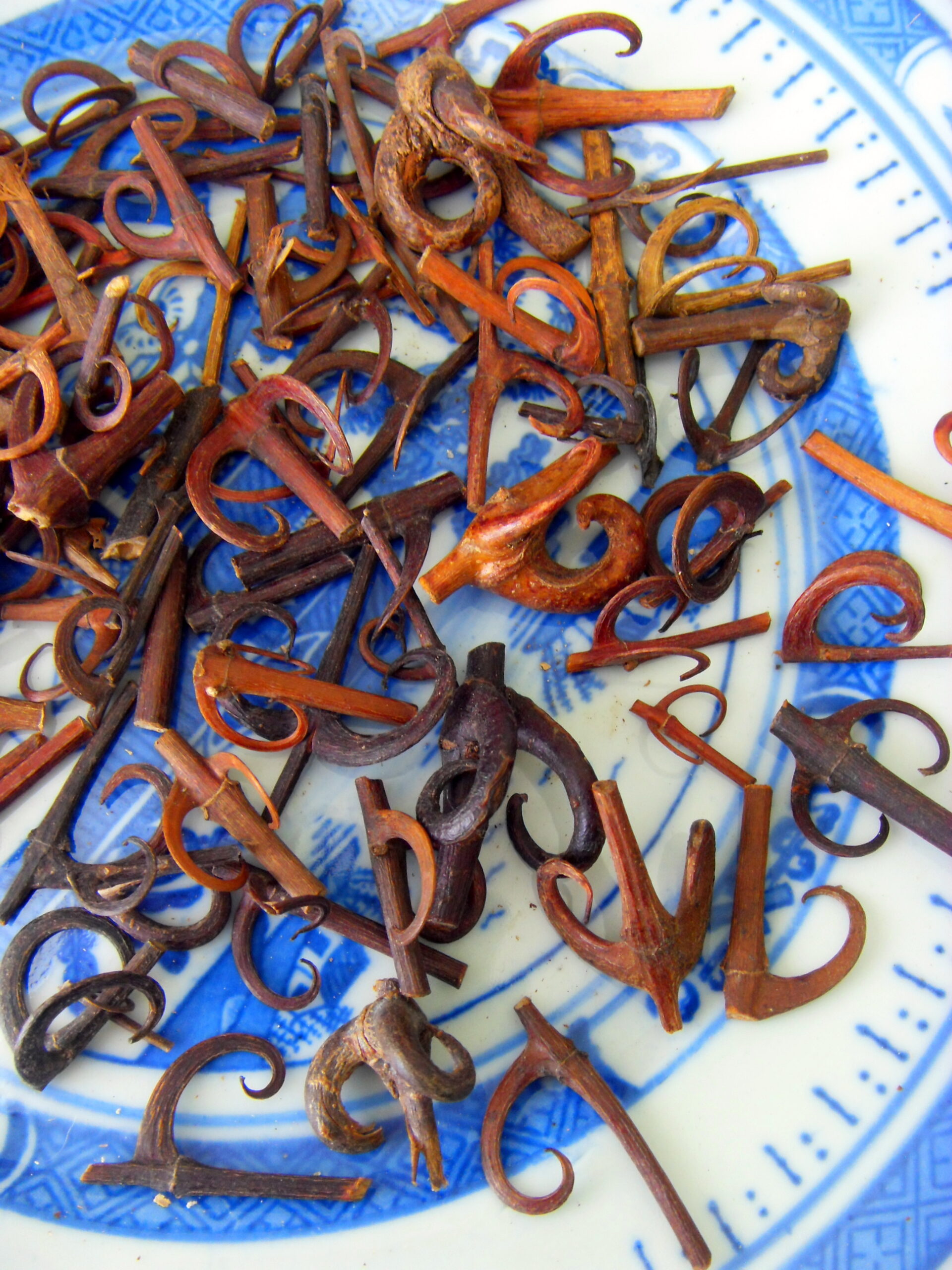 Gambir vine stem |
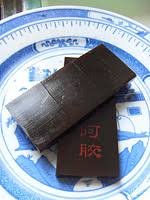 Donkey-hide gelatin |
4. Damp-related itchiness
Localized itchiness that appears skin peeling, cracking, blisters, or softening in the lower legs, genitals or finger webs.
Therapeutic principle: Regulating body fluids to stop itching
Herbal selection: Agastache, fortune eupatorium herb, atractylodes rhizome, coix seed, belvedere fruit
- Damp-heat pattern adds: Capillary wormwood herb, talc, dictamnus root bark, common knotgrass, Christina loosestrife herb, fourstamen stephania root, Glabrous greenbrier rhizome
- Damp-cold pattern adds: Betel nut, beautiful sweetgum fruit, erythrina bark, seven-lobed yam rhizome
- Additional topical herbs for arresting discharges: Smithsonite (calcined), black catechu, spiral shell powder, processed alum, gypsum (calcined), ophicalcite
5. Itching due to drug side effects
Therapeutic principle: Detoxifying to stop itching
Herbal selection: Mung bean, unprocessed liquorice root, bitter apricot kernel, figwortflower picrorhiza rhizome, dyers wood leaf, dandelion, glabrous greenbrier rhizome, honeysuckle flower, Tokyo violet herb, arnebia root, isatis root
6. Itching due to food allergies
Therapeutic principle: Promoting digestion to stop itching
Herbal selection: Dandelion, medicated leaven, costus root, combined spicebush root, millet sprouts, barley sprouts, unprocessed Chinese rhubarb
- Fishes or seafood induced: Perilla leaf, dried tangerine peel
- Meats induced: Hawthorn fruit, chicken’s gizzard-skin
7. Alcohol allergic
Therapeutic principle: Promoting the alcohol expelling process to stop itching
Herbal selection:
- For inducing perspiration: Cardamom, finger citron fruit, villous amomum fruit, kudzu flower, clove, nutmeg, hyacinth bean, lesser galangal rhizome, Tsaoko amomum fruit, mulberry fruit, hawthorn fruit
- For promoting urination: Oriental water-plantain rhizome, polyporus, poria
8. Stasis-related itching
Persistent itching with darkened rashes and nodules on the skin.
Therapeutic principle: Resolving blood stasis to stop itching
Herbal selection:
- Heat-stasis pattern: Dried rehmannia root, cattail pollen, peony root-bark, red peony root, peach kernel, Indian madder root, garden burnet root, red sage root, arnebia root, turmeric root-tuber, camellia, motherwort herb, patrinia herb
- Damp-stasis pattern: European verbena, beautiful sweetgum fruit
- Cold-stasis pattern: Notoginseng, angelica root, frankincense, hirsute shiny bugleweed herb, Sichuan lovage rhizome, Chinese honeylocust spine, cowherb seed, diverse wormwood herb, sappan wood, resinous secretion
 Scorpion |
 Centipede |
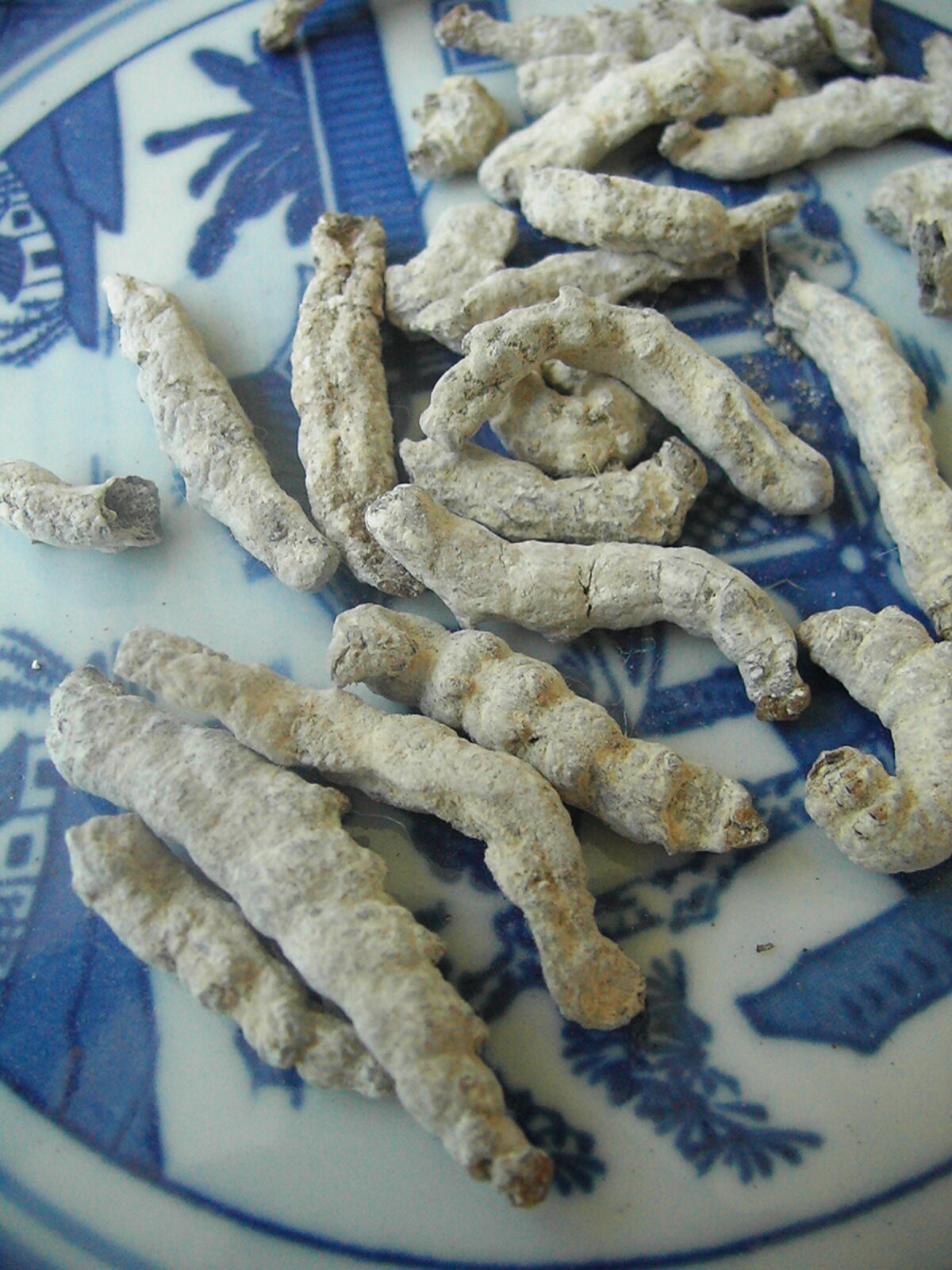 Silkworm |
9. Deficiency-related itching
Persistent, widespread itching that affects the entire body, often accompanied by a crawling or tingling sensation beneath the skin. The skin is usually dry and rough, with little or no visible rash. Symptoms tend to worsen at night and may be triggered or aggravated by changes in the weather, temperature, or environment.
Therapeutic principle: Rectifying internal deficiencies
Herbal selection:
- Yin deficient pattern: Fourleaf ladybell root, Dendrobium, asparagus root, dwarf lily-turf tuber, egg yolk, dried rehmannia root
- Yang deficient pattern: Cassia bark, psoralea, cornus fruit, epimedium, common curculigo rhizome, Chinese eaglewood
- Qi deficient pattern: Astragalus root, Chinese yam, largehead atractylodes rhizome, pilose asiabell root, liquorice root, Asian ginseng
- Blood deficient pattern: Processed rehmannia rhizome, donkey-hide gelatin, mulberry fruit, fleeceflower root
10. Parasitic or Fungal Infection Itching
This may cause persistent itching together with peeling skin, fluid discharge, and skin cracks.
Therapeutic principle: Both oral and external remedies should be applied for symptom relief and arresting further development.
Herbal selection:
- Orally applications: Rangoon creeper fruit, areca seed, thunder ball, pumpkin seed
- External applications: Common cnidium fruit, realgar, shrubalthea bark, veratrum root, calomel, calcined alum, sulfur, chaulmoogra seed, aloe, centipede, blister beetle
Chinese herbal treatment for itchy skin disorders is based on pattern differentiation, a wide variety of herbal medicines can be selected.
In summary, TCM herbal treatment for itchy skin disorders is based on pattern differentiation (syndrome differentiation). Herbs are selected according to the patient’s underlying pattern, with treatment principles such as dispelling wind, eliminating dampness, clearing heat, moisturizing the skin, cooling the blood, nourishing yin, calming the mind, and eliminating parasites. A wide variety of herbal medicines can be selected.
Clinically, some TCM physicians may choose to include bark or peel-type herbs (based on the belief that “using the skin to treat skin disorders”) as well as herbs that have thorns, spines, or hooked structures (symbolically believed to “remove” or “control” itching). These herbs are included to improve the overall effectiveness of the treatment for itchy skin conditions.
TCM physicians may also select insects or animal products, such as centipede, scorpion, stiff silkworm, honeycomb, black rat snake, earthworm, and leech, which are valued for their abilities to clear heat and toxins, dispel deep-seated wind, remove blood stasis, and unblock the meridians and collaterals. When used appropriately, they can be particularly effective in treating chronic or stubborn itching. However, careful attention must be paid to dosage and the possibility of allergic reactions.
Early treatment of itchy skin conditions can help control symptoms and prevent complications. If left untreated, ongoing scratching may cause the skin to become thickened, discolored, and rough, sometimes developing into hard plaques or chronic eczema-like lesions. At this stage, treatment may be more challenging and recovery may take longer.
Further Readings:
TCM Diagnositic principles Four examining skills Organ systems Six evils Qi & blood Herbal Applications Meridian system

